Dress Code
Cover shoulders and knees
Shoulders coveredShort sleeves are fine; no bare shoulders.
To the knee is OKSkirts, dresses, trousers, capris, or longer shorts.
No bare shouldersBring a light layer if unsure.

Rome Visit Guide
Direct visitor guidance for one of Rome's great highlights: what to wear, what to carry, where photos are allowed, and how the Vatican radio system works during the visit.
Before We Go
This guide is only for practical visit information: dress code, security checks, bags, photos, ID, and radios.
Dress Code
Security
Photos
Church Dress Code
You do not need long sleeves or long pants. Short sleeves are fine, and skirts, dresses, or shorts are acceptable when they come to the knee. The issue is bare shoulders and anything clearly above the knee.
If your outfit is borderline, a light scarf, cardigan, or jacket usually solves it. It does not need to look formal; it just needs to cover the shoulder area while entering sacred spaces.
Security Control
Think airport-style screening, but quicker when everyone is prepared. A water bottle is fine, your Vatican radio can stay around your neck, and your photo ID should be easy to reach if requested.
Backpacks should stay on the coach. Smaller essentials are easier to manage through the security line and during the museum route.
Photo Rules
This is where most guests take their photos: courtyards, galleries, sculpture rooms, ceilings, and the Gallery of Maps. Please avoid flash in the museum spaces.
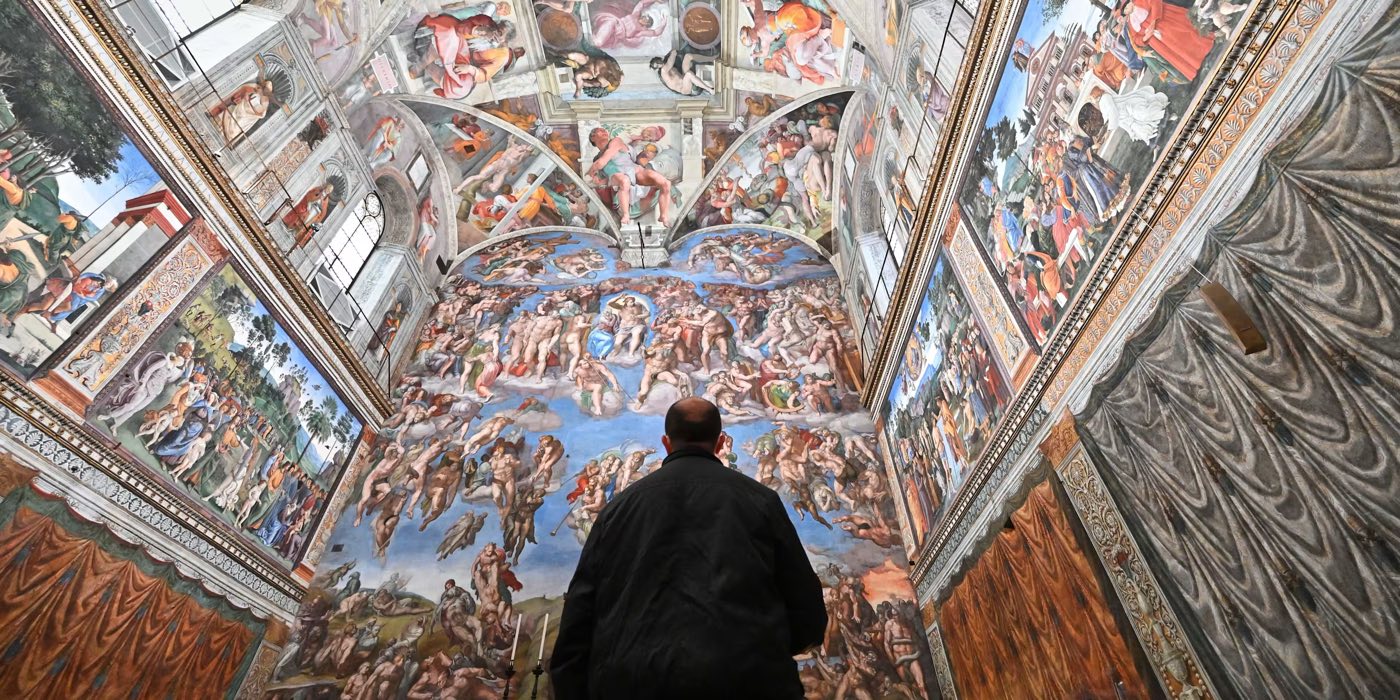
This is the quiet exception. No photos are allowed, so put phones and cameras away before entering and take in the room with your eyes.
Photography, including flash, is allowed in St. Peter's Basilica. Please stay respectful of the church and other visitors.
The best rhythm is simple: take photos where permitted, then keep moving with your local specialist. The route is full of detail, but the group still needs to flow through busy areas together.
Photo ID
Depending on the type of ticket, photo ID may be requested. A physical passport or driver's license is fine, and a clear photo of your passport or driver's license on your phone is usually enough for quick reference.
Vatican Radios
The Vatican Museums are not one single museum room, but a route through centuries of papal collecting. You pass through long corridors where ancient sculpture, tapestries, painted ceilings, and ceremonial spaces sit one after another. It can feel like a palace, an archive, and an art museum all at once.
One of the easiest aha moments is the Gallery of Maps. The walls show Italy as it was mapped in the late 1500s, long before satellites or modern surveying. As you walk through, you are effectively walking through a Renaissance version of Google Maps, with coastlines, cities, mountains, and regions painted by hand.
The route builds toward the Sistine Chapel. Michelangelo did not paint it lying on his back; he worked standing on high scaffolding, painting fresh plaster in sections before it dried. The ceiling tells the story of Creation and early humanity, while the altar wall, painted years later, shows The Last Judgment with a very different, more dramatic energy.
That is why the chapel is more than a famous ceiling. It is a room where art, theology, politics, and human ambition meet, and it is still used today when cardinals gather to elect a new pope.