Today
--°F --°C
Tomorrow
--°F --°C
--°F --°C
--°F --°C
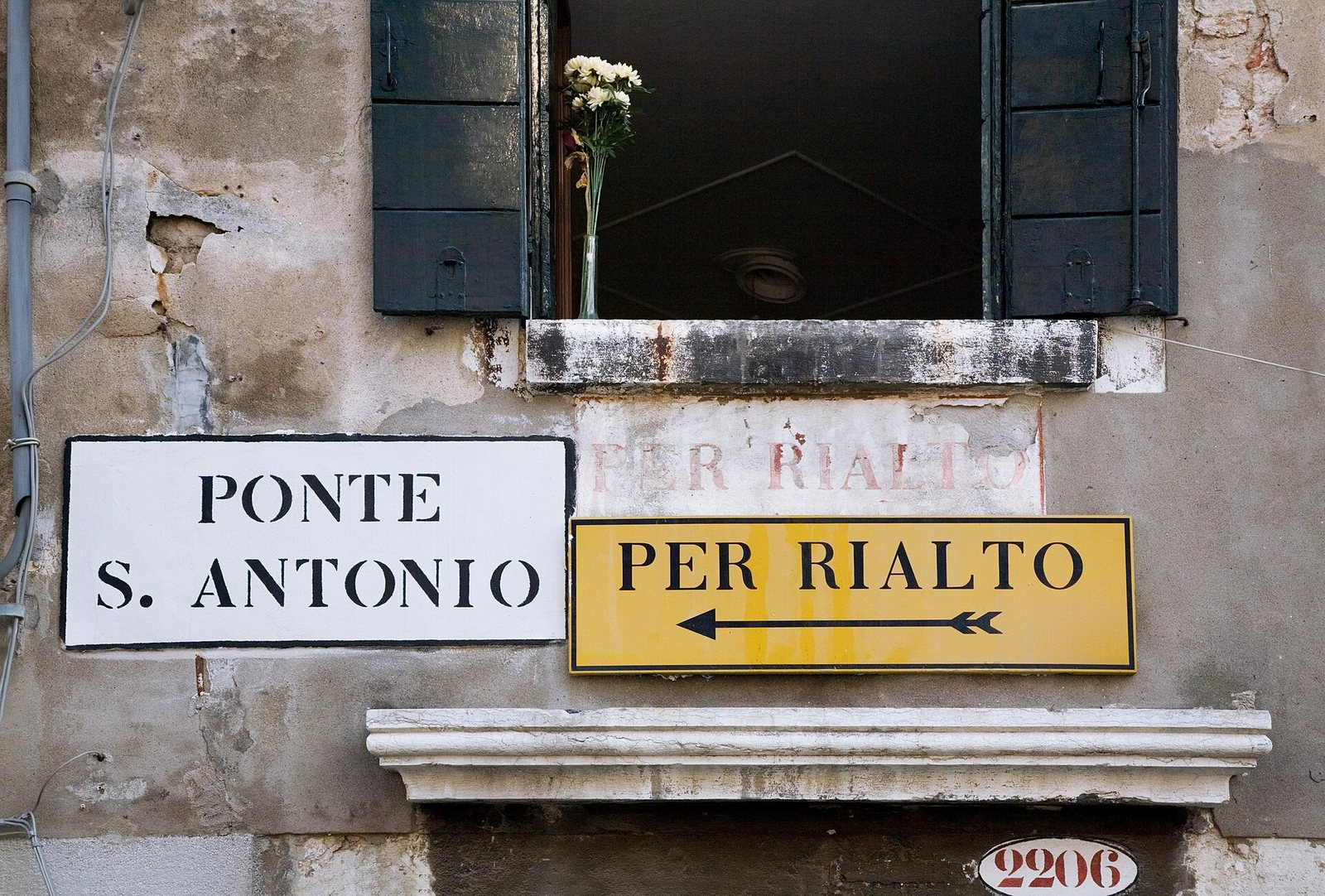
Per Rialto means toward Rialto. Per S. Marco means toward St Mark's. Ferrovia is the train station, and Piazzale Roma is the road arrival point.
These signs are not decoration. They are the practical navigation system locals and delivery workers use when the lanes bend, split, and stop at water.
Look above eye level at corners and sottoporteghi. A sign may send you through a very narrow lane that still looks wrong at first, but it is often the correct route.
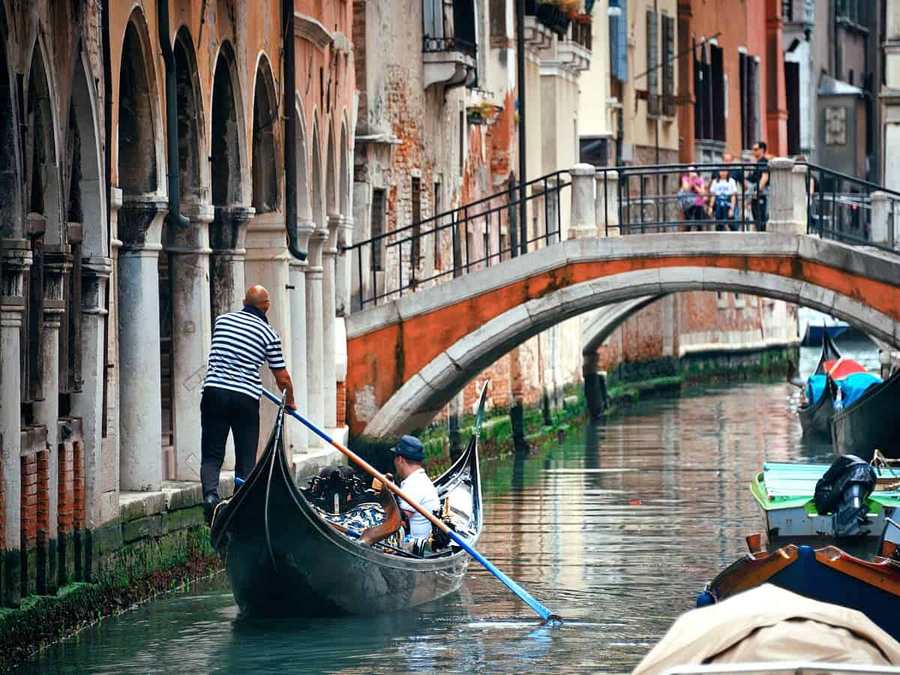
A walk can look indirect because canals decide where you can cross. Two arrows can both be right: one may be faster in the morning, the other clearer when streets are crowded.
Do not fight the map when it sends you around a canal. In Venice, the bridge is the road junction.
Venice often feels like two parallel universes: locals moving to work, school, deliveries, and appointments, and visitors drifting through the same lanes as if the city were a stage set. The two groups can be completely oblivious to each other.
Do not be the oblivious one. Keep to one side in narrow lanes, pause only where people can pass, and never block a bridge for photos. Porters, delivery carts, residents, and guides need space to keep the city moving.
On vaporetto stops and piers, let people off before stepping on. With luggage, move decisively and keep bags close to the wall.
Follow signs for San Marco or Rialto until the route feels familiar again, then reset from there. Those two names are the easiest public anchors in the historic centre.
If your destination is the boat point, look for signs that move you back toward Riva degli Schiavoni, San Zaccaria, or the waterfront. Once you reach open water, the city becomes easier to read again.
City map
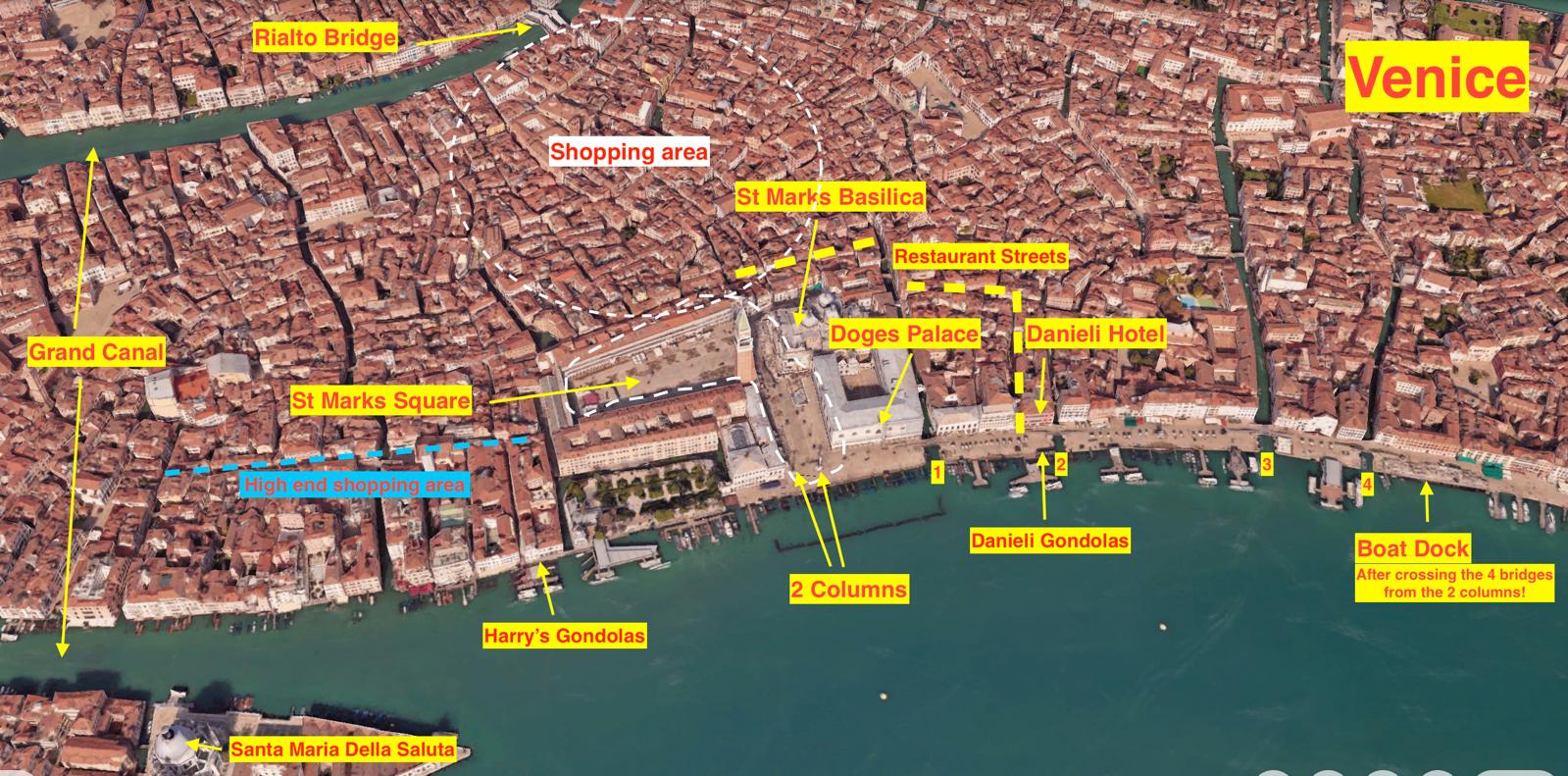
Use the aerial map for orientation, then open the exact point below.
Most important
The meeting point for relevant boat departures. Open it before walking and keep it available.
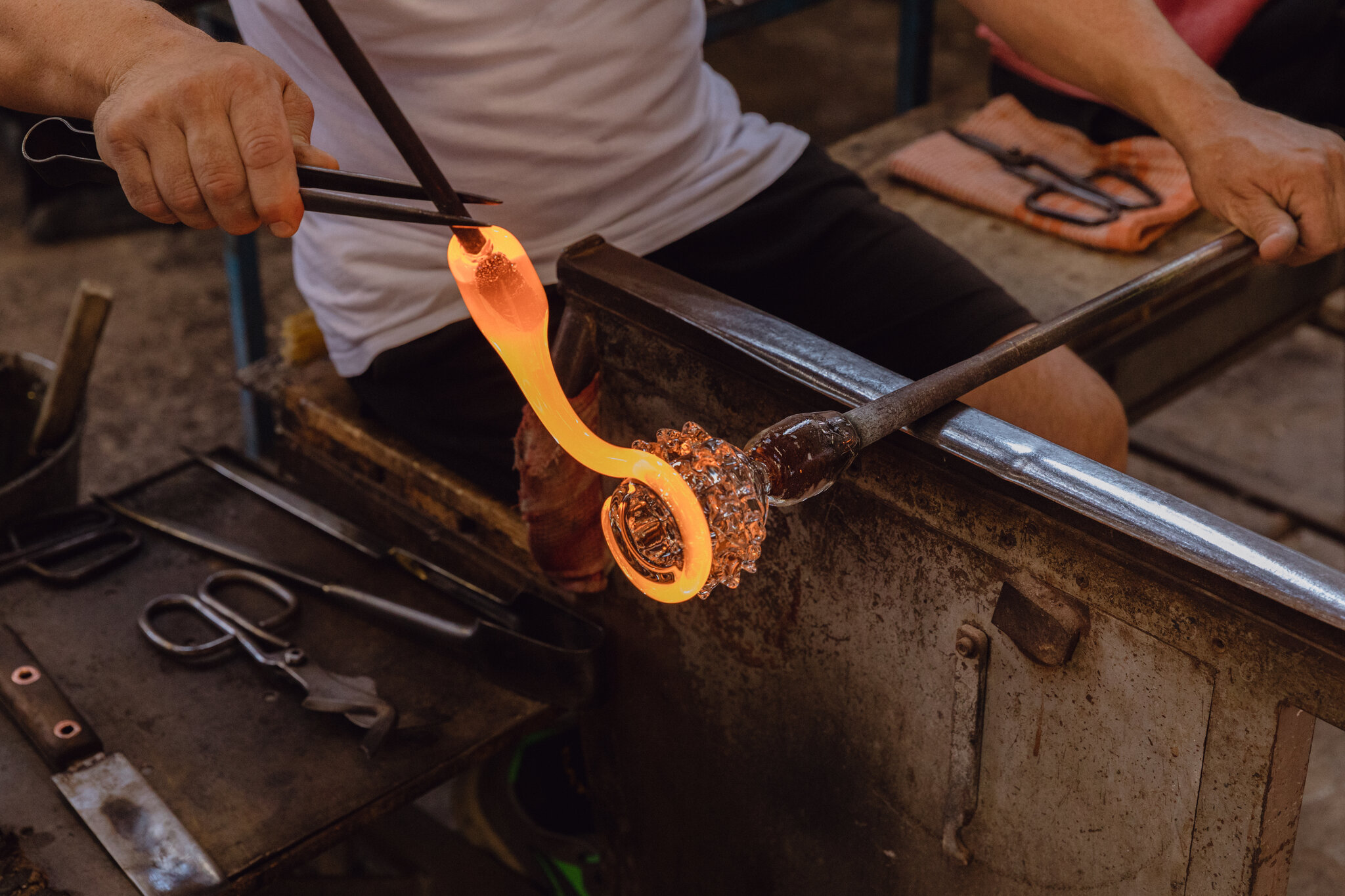
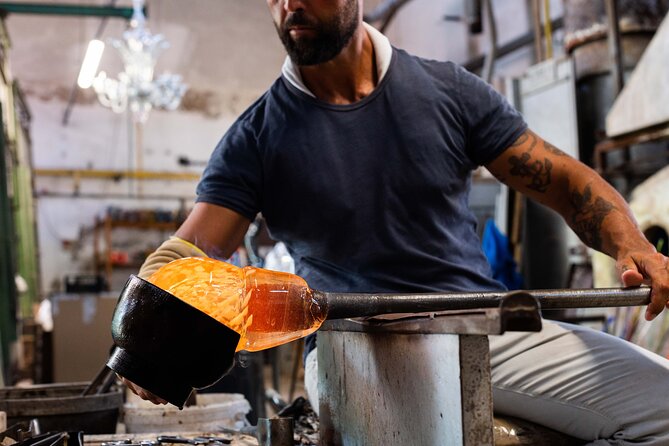
CAM is the Murano glass factory on this visit: a real workshop, a living Venetian craft, and a chance for spending to support the artisans who keep the skill alive.
Learn more at TTC.com →In 1291, Venice moved its furnaces to Murano to protect the wooden city from fire. CAM keeps that island workshop tradition visible through a live glassblowing visit.
The stop supports authentic artisans instead of the cheap imported imitations sold across Venice.
The master works quickly because molten glass changes every second. Heat, timing, breath, tools, and gravity all matter.
Watch the teamwork too: one person may shape, another reheats, another prepares tools. A good demonstration is not only the final object, but the rhythm of the workshop.
Look for Vetro Artistico® Murano certification and ask clearly about shipping, insurance, and authenticity before purchasing.
If a piece is expensive, slow down. Ask what is handmade, whether the colour is inside the glass or applied on top, and what happens if shipping is delayed or damaged.
Free time · local food
If there are free hours between St Mark's and the pier, do what Venetians do: step into a bacaro for cicchetti and an ombra. Small pieces of bread with inventive toppings. A small glass of house wine. Standing at the bar, changing venues every twenty minutes, and keeping lunch light.
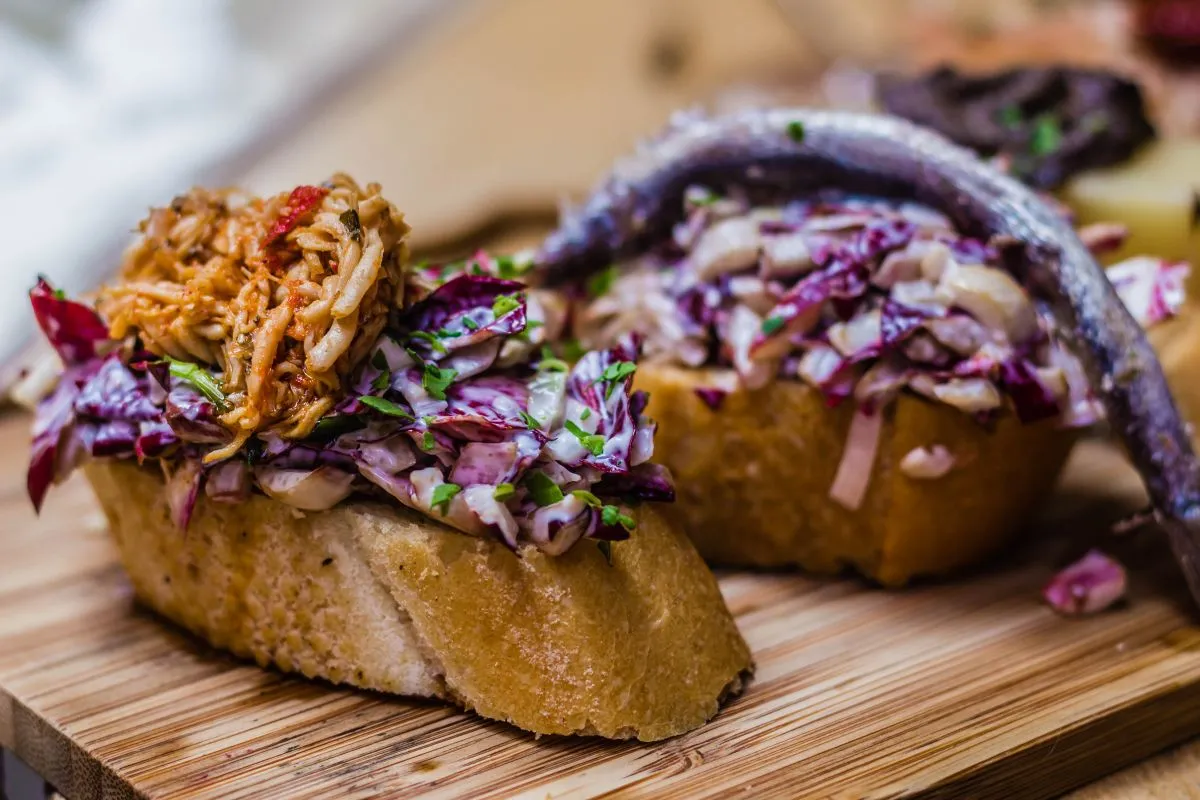
A true Venetian institution near the Rialto Market. Standing room only, best earlier in the day.
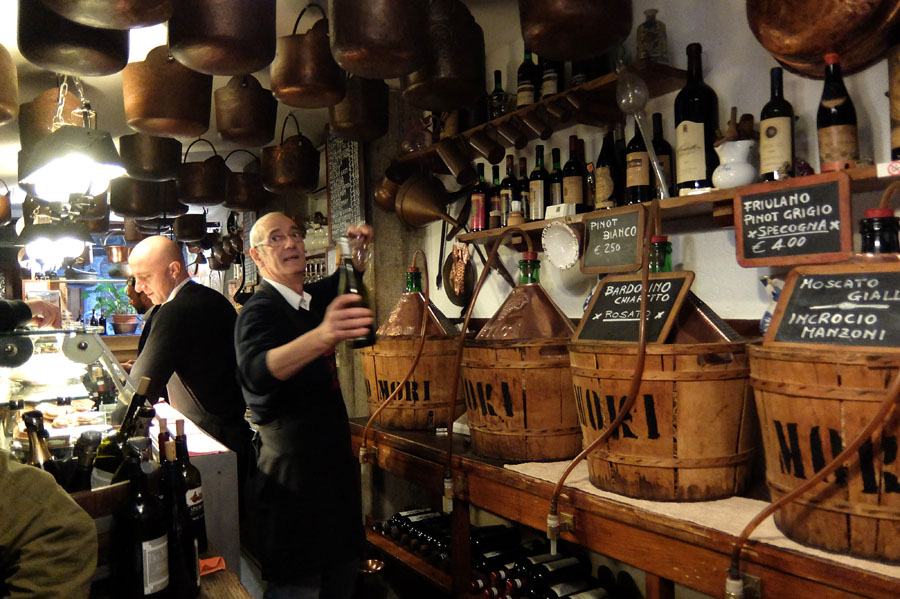
One of the oldest bacari in Venice, dark and atmospheric, close to Rialto.

Convenient for Riva degli Schiavoni and the Cornoldi area before heading to the lagoon.
Seafood is a Venetian strength. For whole fish, ask for the total price before ordering because it is often priced by weight.
How it stands
The city rests on an extraordinary foundation system: timber piles driven into mud, horizontal platforms, and water-resistant stone above.
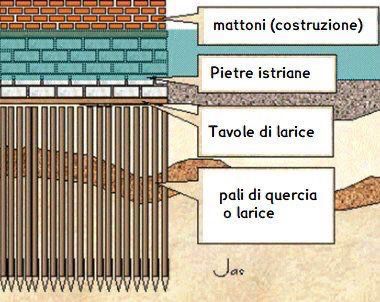 Foundation
Wooden piles were driven into lagoon mud, then covered with planks and Istrian stone to carry brick and marble buildings.
The visible city is only the top layer. Under it is a compacted system of mud, timber, platforms, and stone that spreads the load.
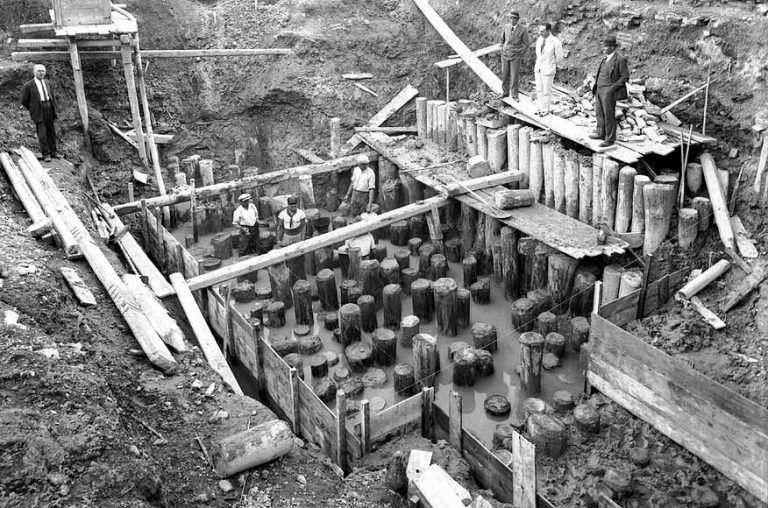 Why it lasts
Submerged timber can survive for centuries because oxygen is limited. The weight of buildings compacted the mud around the piles.
That is why the simple answer "Venice is built on wood" is only half the story. The lagoon conditions are what make the wood behave differently.
 Daily life
Venice moves by foot and boat. Deliveries, ambulances, suitcases, and rubbish collection all work through the water system.
That is why narrow lanes and bridges are working infrastructure, not just scenery. Leave room for people doing everyday jobs.
 Water level
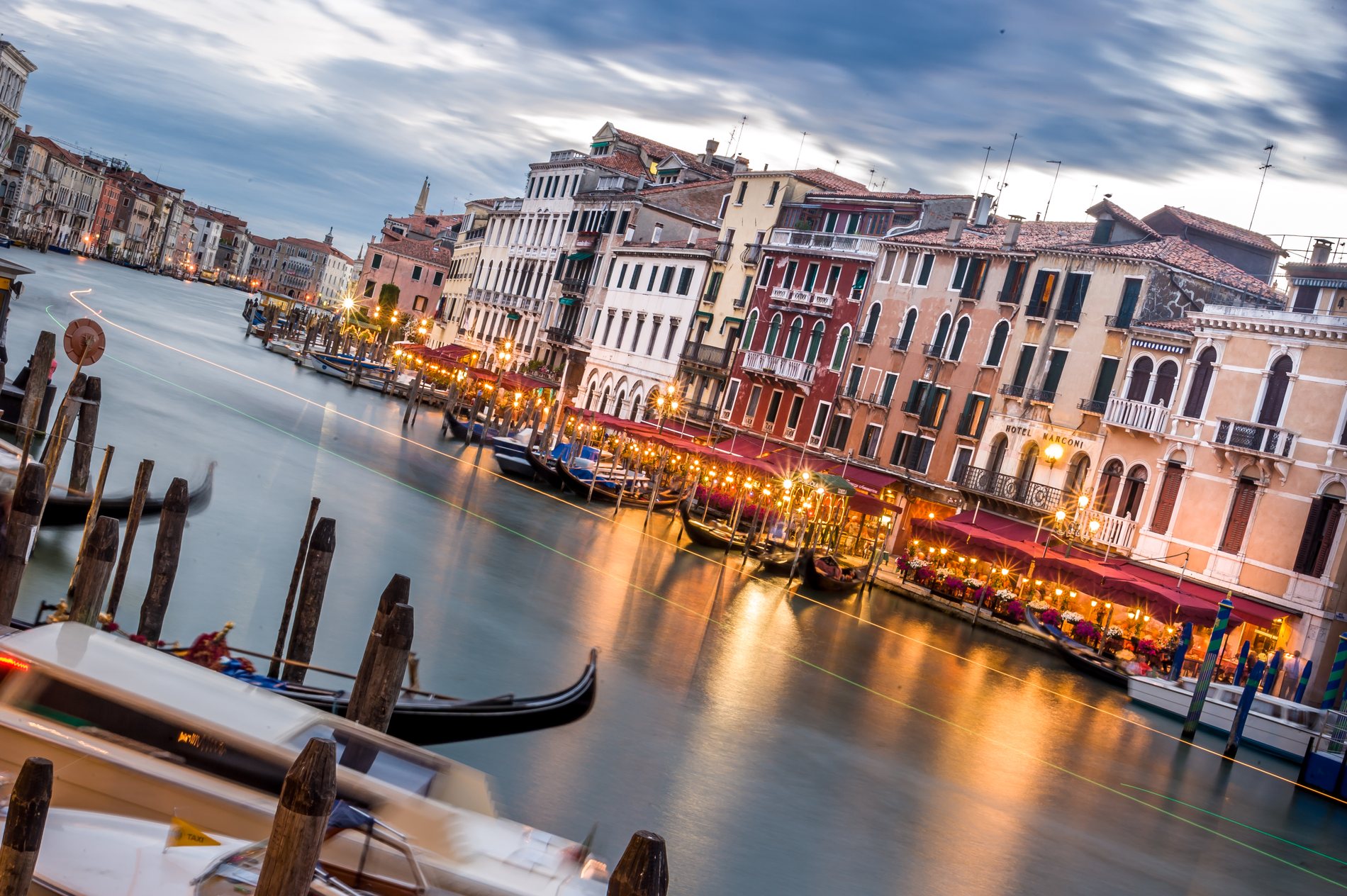
Seasonal high water is normal here. Raised walkways, waterproof boots, and tide updates are more useful than panic.
The city is constantly managed: tides, boat wakes, foot traffic, salt, stone, and modern barriers all shape how Venice survives.
Watch next
A visual explanation of the wooden piles, mud, stone platforms, and lagoon engineering behind the city.
MOSE uses movable barriers at the lagoon inlets to help protect Venice during exceptional high-water events.